Rebuild the parts of the page that are no longer there
Reconstruction is the most powerful thing here and the easiest to abuse, so it is the most constrained. Paper, rules, borders and guilloche are rebuilt freely, because their pattern is fully determined by the surrounding sheet. Text inside a loss is never invented - it is marked as a loss, which is what an archivist would do.
- marked
- losses, never filled with text
- overlay
- every rebuilt region recorded
- revertible
- the original never overwritten
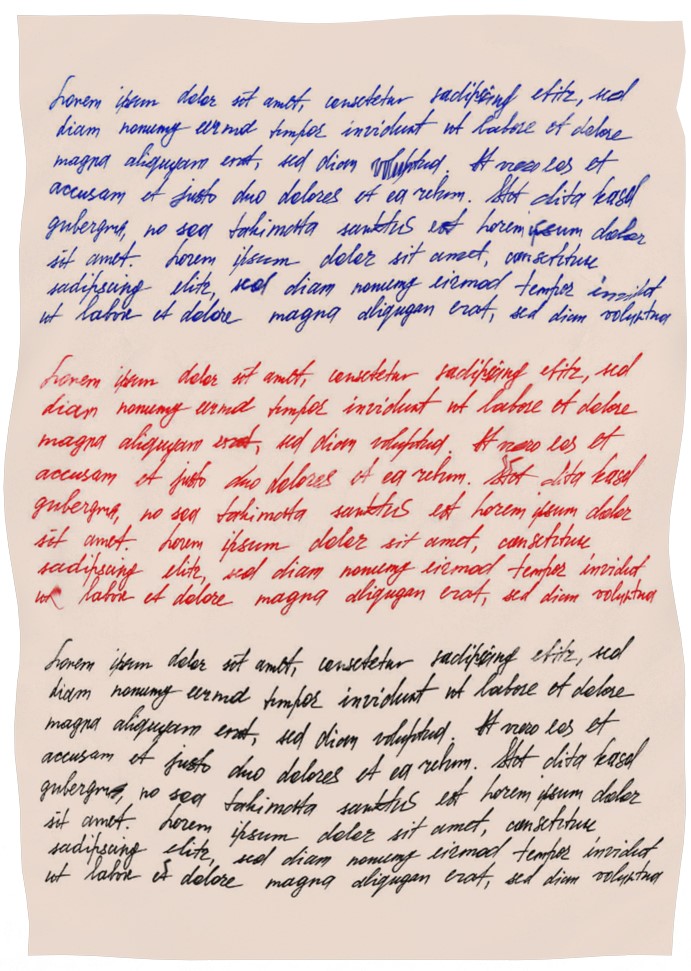
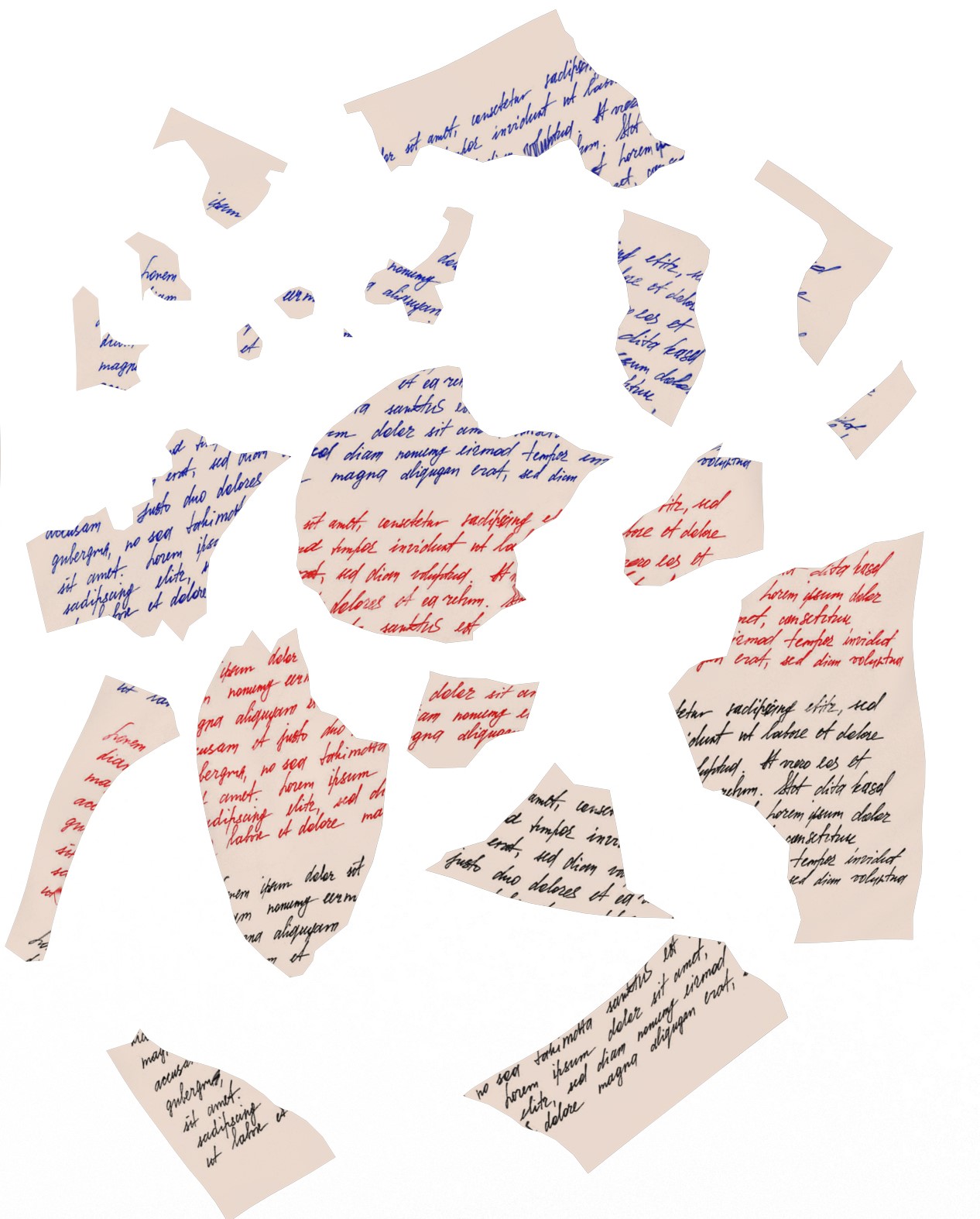
A letter torn into scattered fragments, rebuilt into one whole page from the pieces that survive. Structure is rejoined from the evidence; anything with no surviving piece is marked, not invented.
One precious page, or a whole shelf of them. Document Reconstruction runs the same either way — here is the damage it takes on, and the records it runs across.
and the records it runs across
Why this is harder than it looks
Corners tear off. Edges burn. Silverfish eat through a margin. Most restoration tools either refuse the job or cheerfully hallucinate a paragraph into the hole - and a hallucinated paragraph in a will or a deed is not a restoration, it is a forgery.
What this handles
- Missing corners and torn-away edges
- Burnt or scorched margins
- Insect and rodent damage through the sheet
- Sections lost to mould or damp rot
- Punch holes driven through printed text
- Guillotined margins that clipped the border
How document reconstruction runs
The same three moves on every job, and the third one is the part most tools skip.
Trace the boundary
The loss is outlined precisely, separating genuinely missing paper from paper that is merely damaged - the two get completely different treatment.
Continue the structure
Paper texture, rules, borders, security patterns and table gridlines are continued into the loss from their own geometry on the surviving sheet.
Mark the text
Any text region falling inside a loss is delivered as a marked gap with its extent recorded, so a reader knows exactly what is reconstruction and what is document.
What actually happens to the page
Three moves, and the whole point is the restraint in the third.
Missing paper and damaged paper are not the same thing
The loss is outlined precisely, because the two categories get completely different treatment. A torn-away corner is missing paper; a stained margin is damaged paper that is still there. Confusing them is how tools either refuse the job or hallucinate into it.
- Loss boundary traced, not roughly masked
- Missing vs damaged separated at the edge
- Both classes recorded for the provenance log
Paper, rules and borders are continued from their own geometry
Anything whose pattern is fully determined by the surrounding sheet is rebuilt freely: paper texture, ruled lines, printed borders, security guilloche and table gridlines all continue into the loss from where they run on the surviving page.
- Rules and borders extended along their own line
- Paper grain and texture continued into the gap
- Gridlines and guilloche rebuilt from geometry
Text inside a loss is marked, never generated
Any text region that fell inside the missing piece is delivered as a marked gap with its extent recorded. A hallucinated clause in a will or a deed is not a restoration - it is a forgery - so it is never produced, and the reconstruction is fully revertible.
- Missing text never generated to fill a gap
- Every rebuilt region shown as an overlay
- Reconstruction revertible - original untouched
Built to be trusted at the edges
Document Reconstruction is one capability inside a pipeline built on a single idea: a restoration you cannot trust at the edges is a picture of one.
Everything is read back
Every restored page is read as text and compared against what was legible before, so nothing appears out of nowhere without being flagged.
The original is never lost
The untouched capture is always delivered beside the restoration - the recovery is a new version, never an overwrite.
Refusals are the product
What cannot be recovered is marked, not guessed. The guarantee is built into how the pipeline runs, not asked of a model.
It reads back as data
Fields come out checked against the document's own arithmetic, with withheld values kept in their own column - never mixed with blanks.
One sheet or a whole shelf
Per-page isolation means a single difficult document never stops the run - each page keeps its own progress, result and failure.
Free to try, no card
Free to start, no watermark, and if a document is not recoverable we would rather tell you than sell you a plan.
Where a general-purpose tool goes wrong
The same document, two philosophies. One optimises for a convincing picture; the other for a correct one - and says so when those two part ways.
What most tools do
- Fills the hole with a plausible paragraph
- No record of what is real and what is invented
- Overwrites the original with the guess
- Treats a stain and a tear as the same problem
What Docovly does
- Rebuilds only structure the page determines
- Every rebuilt region recorded and overlayable
- Original kept - reconstruction is revertible
- Missing and damaged paper separated first
What it will not do
Enforced by how the pipeline is built rather than by instructions given to a model - which is the only kind of guarantee worth writing down.
- 1Missing text is never generated to fill a gap
- 2Every reconstructed region is recorded and can be shown as an overlay
- 3Reconstruction is revertible - the original is never overwritten
marked
text losses, never filled
overlay
of every reconstructed region
revertible
the original is never overwritten
geometry
the only thing structure is rebuilt from
Document Reconstruction, answered
What people ask before sending us a document with this kind of damage.
Have a document you are not sure about?
Send us a photograph of it. We will tell you honestly whether it is recoverable before you spend anything.
Ask usCorrect, and that is deliberate. Structure that is determined by the surrounding page - paper, rules, borders - is rebuilt. Text that existed only in the missing piece is marked as lost. Anything else would be inventing evidence.
Also in Repair damage
Send us the damaged one
Free to start, no card. If your document is not recoverable, we would rather tell you that than sell you a plan.