Conserve a shelf of certificates, not one sheet at a time
A sheet register built for batch work. Survey the condition the way a conservator records it, take the sheets in, then apply a treatment across a selection - opening any single sheet that needs attention.
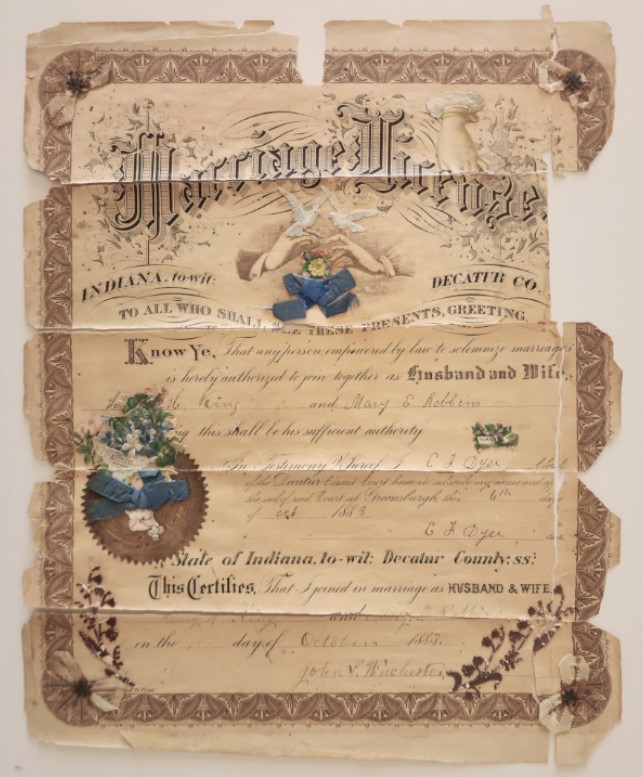
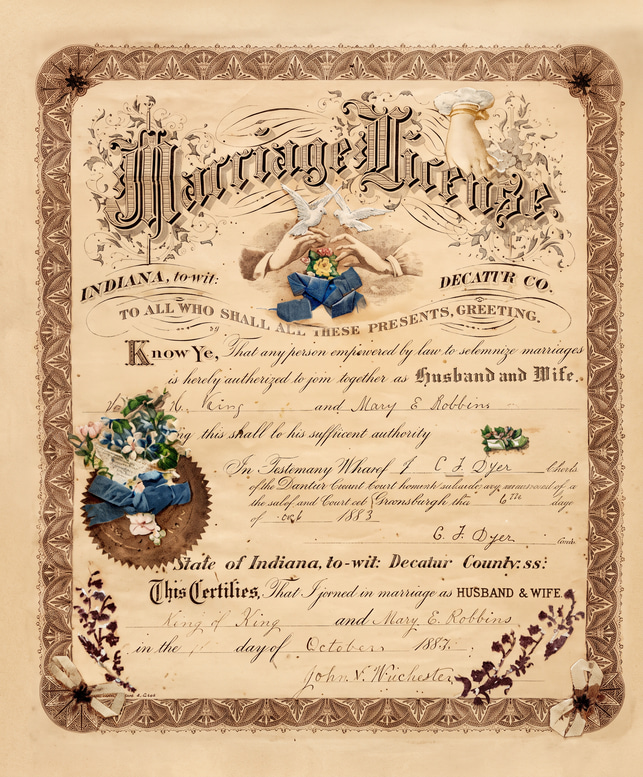
Captured
- DocumentMarriage licence
- CountyDecatur, Indiana
- BrideMary E. Robbins
- SolemnisedOct. 1883
- Groom's forenamewithheld
The groom's forename could not be read with confidence on the licence, so it is withheld, not guessed.
A batch runs sheet by sheet; captured values drop into the table as each one clears. Drag to compare.
Every kind of certificates we restore
12
certificate types
batch
a shelf at a time
seals
composited, not faked
0
wording ever rewritten
What goes wrong with these documents
The survey vocabulary is specific to this document family, because the damage is. Recording it is what produces the restoration instruction - there is no prompt box.
- Water tide lines, foxing and mould
- Roll creases from tube storage
- Tears, tape residue and staple holes
- Faded ink and worn calligraphy
- Glass glare and frame shadow
- Keystoning from a photographed original
One workflow, from a box of paper to a filed archive
Every job runs the same four stages a records office would - survey, intake, treat, verify - and the console keeps the whole run in view the entire time.
Survey the shelf
Record each sheet's condition the way a conservator would - tide lines, foxing, roll creases, frame glare. The survey drives every treatment.
Take the sheets in
Drop photos, scans or PDFs. They become a numbered register you can reorder, rotate and split before anything runs.
Treat a selection
Apply a treatment across the whole batch, or open any single sheet that needs its own attention. Each lands as a revertible version.
Read back & deliver
Wording is checked against the original, seals are composited back, and the collection exports as one organised archive.
What this console can do to a page
Any treatment can run on a single page or across the whole batch, and each lands as its own revertible version.
Full restoration
Everything in the survey. Rebuilds the sheet, and its wording is verified afterwards.
Archival revival
Cracks and surface degradation on aged paper, without redrawing lettering.
Tear & hole repair
Mark a tear or missing corner and only that area is rebuilt.
Print clarity
Faded printing, calligraphy and scan artefacts.
Capture correction
Camera shake and soft focus from photographed originals.
Conservation hold
Box a seal, wax or signature and it is composited back from the original.
The sheet comes back; the wording is checked against what it said
Restoration must not rewrite a certificate. Text is read back after every treatment and compared to the original, and the seal is the original - composited, never regenerated.
- Wording is read back and compared to the untouched original after each treatment.
- Seals, wax and signatures are boxed and composited back from the source.
- Certificate numbers are checked against their format where one exists.
- Anything that cannot be read with confidence is withheld into its own column.
Read back & checked
- Wordingmatches the original
- Sealcomposited back
- Certificate no.format valid
- Registrar signaturewithheld
3 passed · 1 withheld into its own column
12 document types
Everything this console takes in
Pick the type before you upload and the uploader, format rules and checks follow from it.
Captured as data
What is read back off the page
Every field carries its confidence and its source crop, and anything that fails a check is withheld into its own export column rather than delivered.
Capture guidance
Get this right and everything downstream is easier
- 1Scan at 300 DPI or higher to preserve fine seal detail.
- 2Include the border - stamps often sit near the edges.
- 3Flatten folds before scanning to reduce shadow lines.
The jobs this console is built for
Real reasons people restore these documents - an application, a claim, an archive before the paper gives out.
A box of family certificates
Birth, marriage and death certificates lifted out of foxing and tide lines into a clean, filed set before the paper degrades further.
A framed award, reglazed
Glass glare and frame shadow removed from a photographed diploma so it reads as a document again, not a reflection.
A registry of school certificates
A stack of educational and training certificates batched into one organised, searchable archive.
12
certificate types
Restoration must not rewrite a certificate. Text is read back after every treatment and compared to the original, and the seal is the original - composited, never regenerated. The untouched original is always delivered alongside the restored file.
A legible copy of a record you already hold
Restoration is a reading aid and an archival tool. Being plain about the line it does not cross is part of the product.
- Restores certificates, diplomas and awards you already hold
- Works a whole shelf as one batch
- Composites seals and signatures back from the original
- Exports the collection as an organised archive
- Issue, reissue or certify any award
- Fabricate a seal, stamp or signature
- Change the wording of a document
- Produce a copy meant to pass as an original
“We fed in a shelf of forty-year-old certificates and got back an archive we could actually read - with the seals still on them.”
Certificates, answered
The questions people ask before sending us this kind of document.
Have a document you are not sure about?
Send us a photograph of it. We will tell you honestly whether it is recoverable before you spend anything.
Ask usDraw a box around an embossed seal, wax, gold leaf or a registrar's signature and that region is copied back from the original after every treatment, with a feathered edge. The marks on the delivered sheet are the originals, guaranteed by compositing rather than by asking a model nicely.
Also in Records & Awards
Try it on your worst certificate
Free to start, no card. The untouched original is always delivered alongside the restored file.