The paperwork proving the loss was in the loss
Recover policies, receipts and proof-of-loss documents damaged by the same fire, flood or storm they are meant to evidence.
Water-damaged page
1 loss reported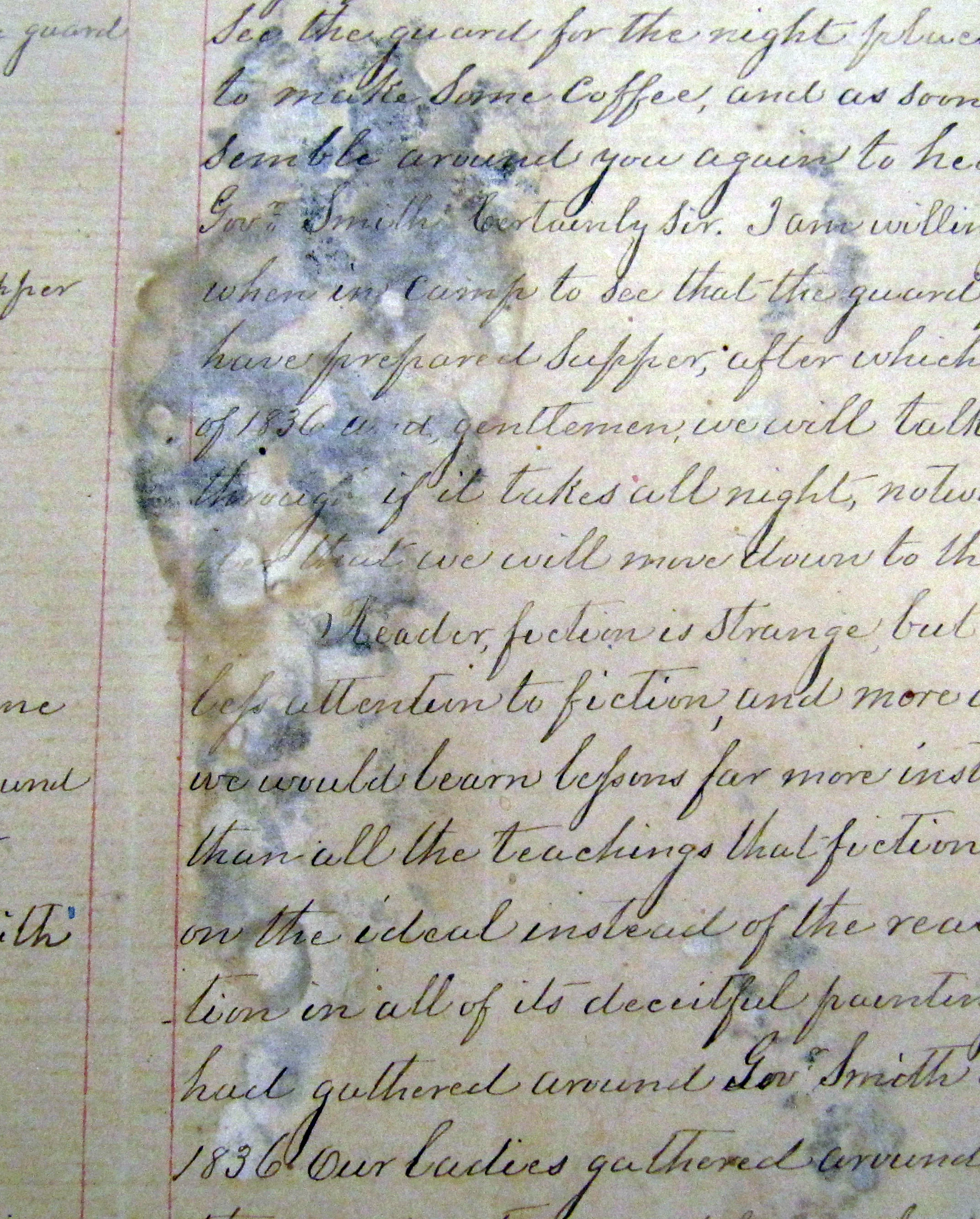
Where the fibre is gone, the text is marked as lost - never invented into a claim file.
Built for insurance & claims
What this usually looks like before us
A flood claim is usually argued from paper the flood went through. Docovly lifts water, soot and mould from around the text rather than through it, recovers the figures, and reports what could not be recovered - because an adjuster needs the gaps marked, not filled.
Four steps, and it asks you almost nothing
The console looks at the page, says what it found and what it proposes, and does it. You never have to learn the filing system to get the benefit of it.
Add
Damaged paperwork goes in exactly as it survived - wet, scorched or both.
Look
The staining is measured as a layer over the paper, separately from the ink.
Restore
Damage is lifted from around the writing rather than through it.
Finish
Figures are reconciled, and anything unrecoverable is reported for the file.
How the work is different afterwards
Survey, treatment and verification - the same three things the console shows you on every single page.
Damage lifted, evidence kept
Water lines, soot and mould are separated from the ink layer, so a tide mark comes off without taking the figures it crossed.
Figures that reconcile
Recovered amounts are totalled against their own columns and any mismatch is flagged, because a misread digit in a claim is a dispute later.
Losses stated plainly
Where the paper is gone the text is marked as lost and reported, which is exactly what an adjuster or a loss assessor has to be able to show.
An adjuster needs the holes shown, not smoothed over
Where the fibre itself is gone, the area is treated as a loss: paper is rebuilt, and any text that lived on the missing piece is marked and reported. A plausible invented figure in a claim file is worse than a blank.
- Stain lifted as a layer, ink density preserved underneath
- Losses reported rather than reconstructed as text
- Recovered amounts totalled and mismatches flagged
- Every treatment retained and revertible for the file
- The untouched original always delivered alongside
Policy schedule, flood-damaged
Version history · every step revertible
marked — gaps, not filled
“It told us which figures it could not read. That honesty is what made the file defensible when the claim was challenged.”
Loss adjuster, household claims
Who this is for
Insurance & Claims covers a few different jobs. These are the ones people arrive with.
Loss adjusters
Read the proof of loss that went through the same flood as the loss.
Claims handlers
Settle from legible evidence instead of an estimate and an argument.
Restoration contractors
Digitise a client's damaged records as part of the make-good.
What this audience actually uses
The consoles and the restoration behind them - every one of these is a real page, not a feature list.
Start with one difficult document.
Free to start, no card. Bring the sheet your current process cannot handle and judge insurance & claims on that.
Insurance & Claims, answered
What this audience asks before committing anything to a restoration pipeline.
Have a document you are not sure about?
Send us a photograph of it. We will tell you honestly whether it is recoverable before you spend anything.
Ask usUsually. Staining is modelled as a layer over the paper and lifted from around the strokes, so the writing underneath survives the clean. Where the fibre itself has rotted away, that area is reported as a loss rather than rebuilt.
Evidence recovered from the damage itself.
Recover policies, receipts and proof-of-loss documents damaged by the same fire, flood or storm they are meant to evidence.
Free to start · no card · the original is always kept