The letter is irreplaceable. The restoration should act like it
Restore family letters, photographs, certificates and journals gently - and read the handwriting back without changing it.
Family letter, February 1906
1 uncertain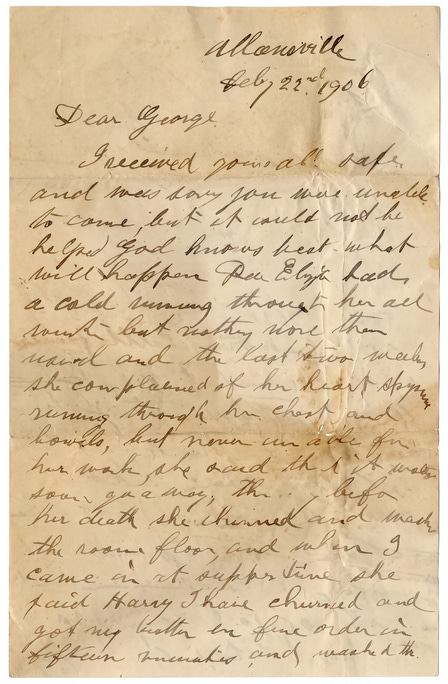
Transcription · delivered beside the image
Dear George,
I received your letter safe and was
sorry you were unable to come, but
it could not be helped. Aunt Eliza
Her hand is left exactly as written. Doubtful words are shown with their own crop.
Built for family history
What this usually looks like before us
Family paper gets the gentlest defaults in the platform: damage lifted from around the strokes rather than through them, and never a hand rewritten. Thirty free points is enough to restore a letter and judge the result on your own paper rather than on someone else's demo.
Four steps, and it asks you almost nothing
The console looks at the page, says what it found and what it proposes, and does it. You never have to learn the filing system to get the benefit of it.
Add
Photograph the letter with your phone - it does not need a scanner.
Look
The page is surveyed and the handwriting identified as handwriting.
Restore
Damage is lifted from around the strokes; the hand is left exactly as written.
Finish
Download the restored sheet, the transcription, and the untouched original.
How the work is different afterwards
Survey, treatment and verification - the same three things the console shows you on every single page.
Gentle by default
Fading and staining are lifted without touching the handwriting - letterforms are left exactly as they were written.
Creases from decades of folding
Fold shadows are removed and strokes crossing the crease are rejoined from both sides.
Transcribed, not replaced
The letter is read into searchable text delivered beside the image, never over it.
Her handwriting, not a computer's
Personal paper runs at the careful setting by default: fading and staining lifted from around the strokes, letterforms left exactly as they were written, and the reading delivered as separate text beside the image rather than over it.
- Letterforms restored, never normalised or re-set
- Transcription delivered beside the image, not on it
- Uncertain words shown with their original crop
- Fold shadows removed and strokes rejoined across the crease
- Free to start, no card - try it on your own letter
Personal letter, 1943
Version history · every step revertible
30 — free points, no card
“My grandfather's field letters are readable for the first time since I inherited them. His handwriting, not a computer's.”
Family historian, Yorkshire
Who this is for
Family History covers a few different jobs. These are the ones people arrive with.
Family historians
Read the letters and certificates your research actually depends on.
Anyone who inherited a box
Start with the one document you care about most and go from there.
Memoir and legacy projects
Turn a shoebox into something the rest of the family can actually read.
What this audience actually uses
The consoles and the restoration behind them - every one of these is a real page, not a feature list.
Start with one difficult document.
Free to start, no card. Bring the sheet your current process cannot handle and judge family history on that.
Family History, answered
What this audience asks before committing anything to a restoration pipeline.
Have a document you are not sure about?
Send us a photograph of it. We will tell you honestly whether it is recoverable before you spend anything.
Ask usNo. Personal documents default to the gentlest treatment available: damage is lifted from around the strokes and the letterforms themselves are left as they were written.
Letters and keepsakes, gently.
Restore family letters, photographs, certificates and journals gently - and read the handwriting back without changing it.
Free to start · no card · the original is always kept