Heritage material, treated like heritage material
Archival paper needs engines that repair a surface without modernising a hand. Palaeographic material gets its own transcription pass, and every treatment is recorded so the archive can say precisely what was done.
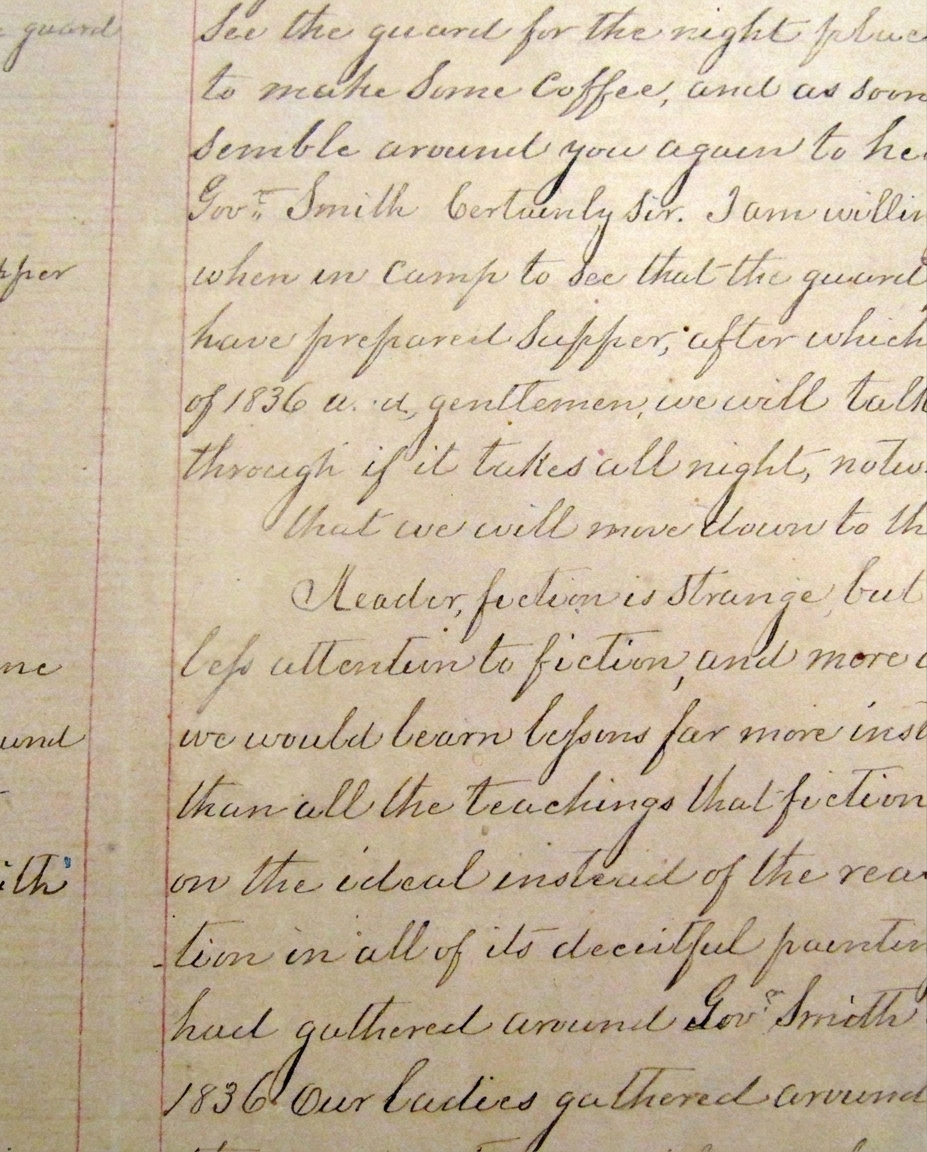
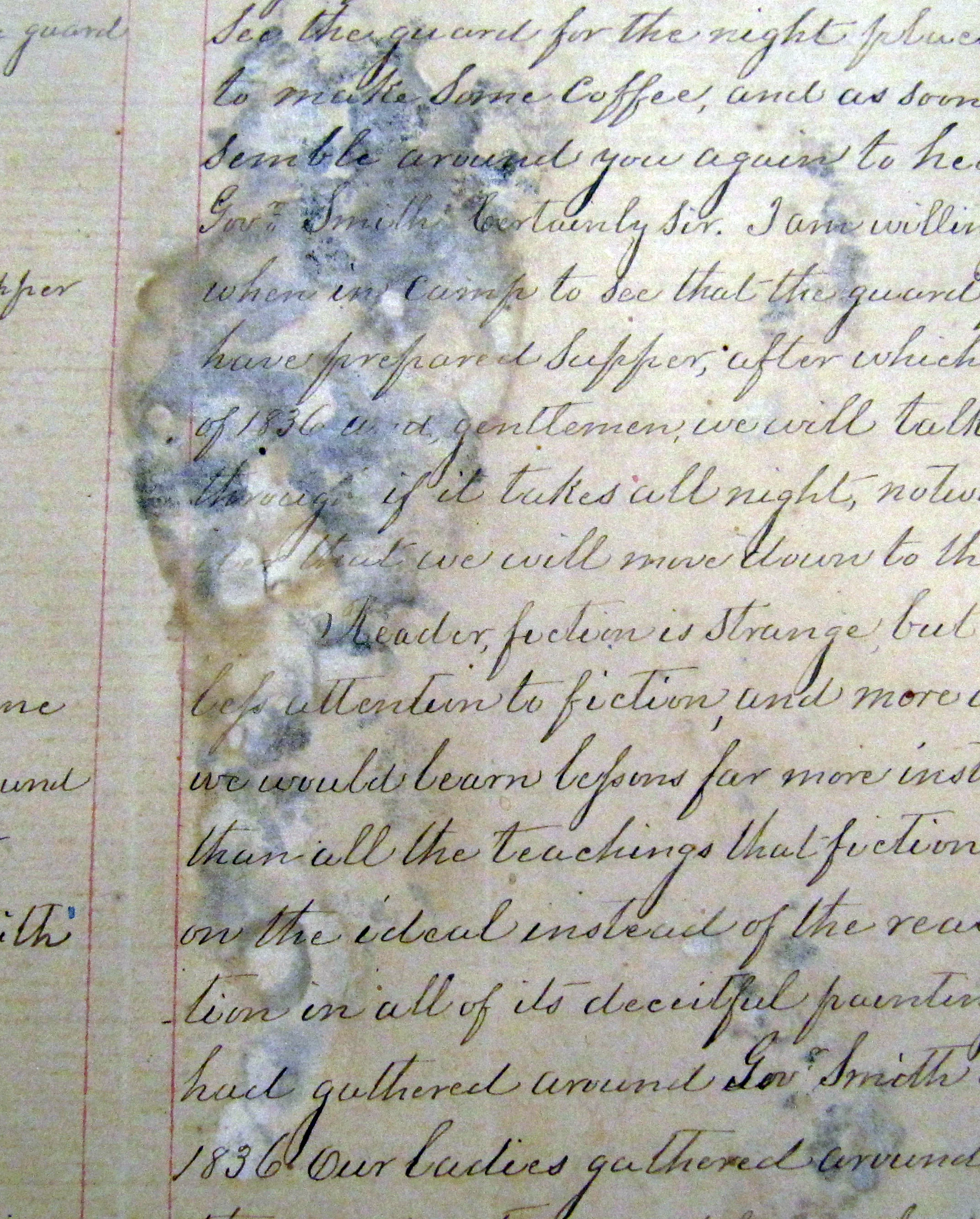
Transcription
…to make some coffee, and as soon
assemble around you again to hear.
Gov. Smith: 'Certainly, sir. I am willing
when in camp to see that the guard
have prepared supper…' — a memoir, 1836.
A cleaning passes across the page; the damage lifts and the text is read back. Every job keeps the untouched original.
Every kind of historical & archival we restore
1600s
hands transcribed
revertible
every treatment
provenance
chain recorded
facsimile
resolution out
What goes wrong with these documents
The survey vocabulary is specific to this document family, because the damage is. Recording it is what produces the restoration instruction - there is no prompt box.
- Foxing, mould and water tide lines
- Tears, losses and missing corners
- Iron gall ink burn-through
- Brittle, cracked and rolled paper
- Insect damage and silverfish grazing
- Faded sepia and light-struck areas
Survey, treat, read, deliver
Every job follows the same careful path, and each treatment lands as its own revertible version with a record of what was done.
- 1
Survey the item
Record foxing, tide lines, tears, ink burn-through and brittleness the way a conservator would, on each leaf.
- 2
Treat the surface
Aged-paper degradation is lifted without redrawing a single letterform - a secretary hand stays a secretary hand.
- 3
Read the hand
A palaeographic pass transcribes early modern scripts and Latin abbreviation, marking every expansion it made.
- 4
Record & deliver
Each treatment lands as a revertible version with its own record, so the archive can say exactly what was done.
What this console can do to a page
Any treatment can run on a single page or across a whole collection, and each lands as its own revertible version.
Archival revival
Surface degradation on aged paper, without redrawing letterforms.
Tear & loss repair
Mark a tear or missing corner and only that area is rebuilt.
Foxing & stain lift
Removes spotting and tide lines from around the ink.
Palaeographic transcription
Reads secretary hand and early modern scripts into text.
Tone control
Preserve the original tone, return to cream, or go archival white.
Detail recovery
Resolution for exhibition prints and facsimile editions.
Heritage material, treated like heritage material
Archival paper needs engines that repair a surface without modernising a hand. Transcription is delivered as separate text so the image is never overwritten with a modern rendering.
- The paper surface is repaired without redrawing letterforms.
- Transcription is delivered as separate text, beside the image, never over it.
- Every treatment is a revertible version with its own provenance record.
- Latin and early modern expansions are marked so an editor can check them.
Provenance
- Every treatment
- revertible
- Transcription
- delivered separate
- The hand
- never redrawn
10 document types
Everything this console takes in
Pick the type before you upload and the uploader, format rules and checks follow from it.
Captured as data
What is read back off the page
Every field carries its confidence and its source crop, and anything that fails a check is withheld into its own export column rather than delivered.
Capture guidance
Get this right and everything downstream is easier
- 1Capture with even, diffuse light - raking light exaggerates cockling.
- 2Include a scale bar or ruler in the frame where possible.
- 3Never flatten brittle originals to scan them; photograph instead.
The jobs this console is built for
Real reasons people restore these documents - an exhibition, a family album, a searchable archive before the paper gives out.
A parish register for the archive
Foxing and tide lines lifted off a brittle register, the entries transcribed and the item kept in full provenance.
A letter collection for exhibition
Iron-gall burn and fading recovered to exhibition quality without a single hand being modernised.
A manuscript for a facsimile
An early modern manuscript cleaned and read, delivered at facsimile resolution with the transcription beside it.
1600s
hands transcribed
Archival paper needs engines that repair a surface without modernising a hand. Transcription is delivered as separate text so the image is never overwritten with a modern rendering. The untouched original is always delivered alongside the restored file.
A legible copy of a document you already hold
Restoration is a reading aid and an archival tool. Being plain about the line it does not cross is part of the product.
- Repairs tears, foxing and water damage on archival paper
- Transcribes secretary hand and early modern scripts
- Records a full provenance chain for the catalogue
- Delivers exhibition and facsimile-resolution files
- Modernise or redraw historical handwriting
- Overwrite the image with a transcription
- Invent text where the original is illegible
- Discard the untouched original
“It repaired the surface of a 1662 register and handed us a transcription without touching a single letterform. For an archive, that separation is everything.”
Historical & Archival, answered
The questions people ask before sending us this kind of document.
Have a document you are not sure about?
Send us a photograph of it. We will tell you honestly whether it is recoverable before you spend anything.
Ask usNo. The engines chosen for heritage material repair the paper surface without redrawing letterforms - a secretary hand stays a secretary hand. Transcription is delivered as separate text so the image is never overwritten with a modern rendering.
Also in Heritage & Media
Try it on your worst historical & archival
Free to start, no card. The untouched original is always delivered alongside the restored file.