Lift the stain from around the ink, not through it
A stain sits on top of the text, which is why naive cleaning takes both. Docovly separates the staining layer from the ink layer first, so a tide line can be removed while every stroke it crossed stays exactly where it was.
- layer-split
- stain separated from ink
- per-region
- cleaning strength, not one setting
- measured
- ink density kept before and after
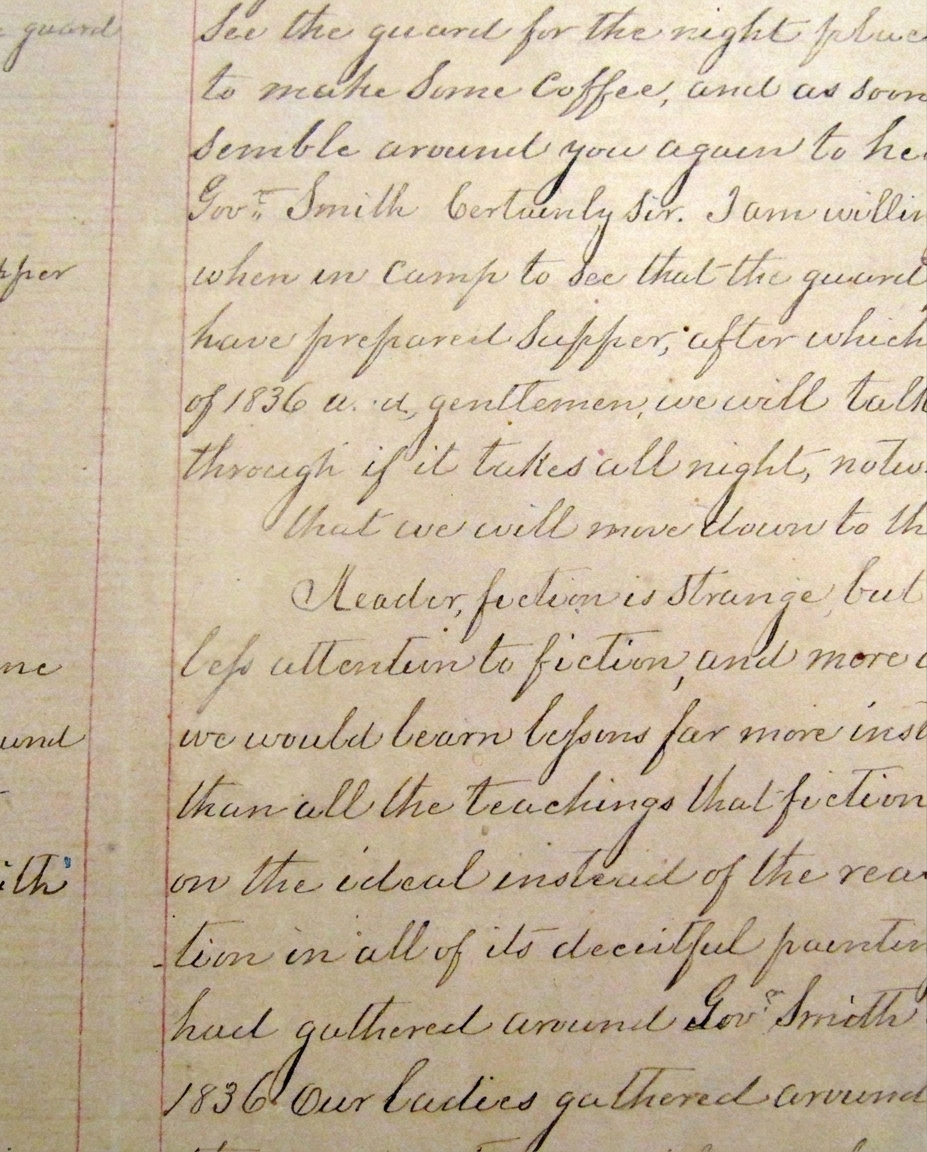
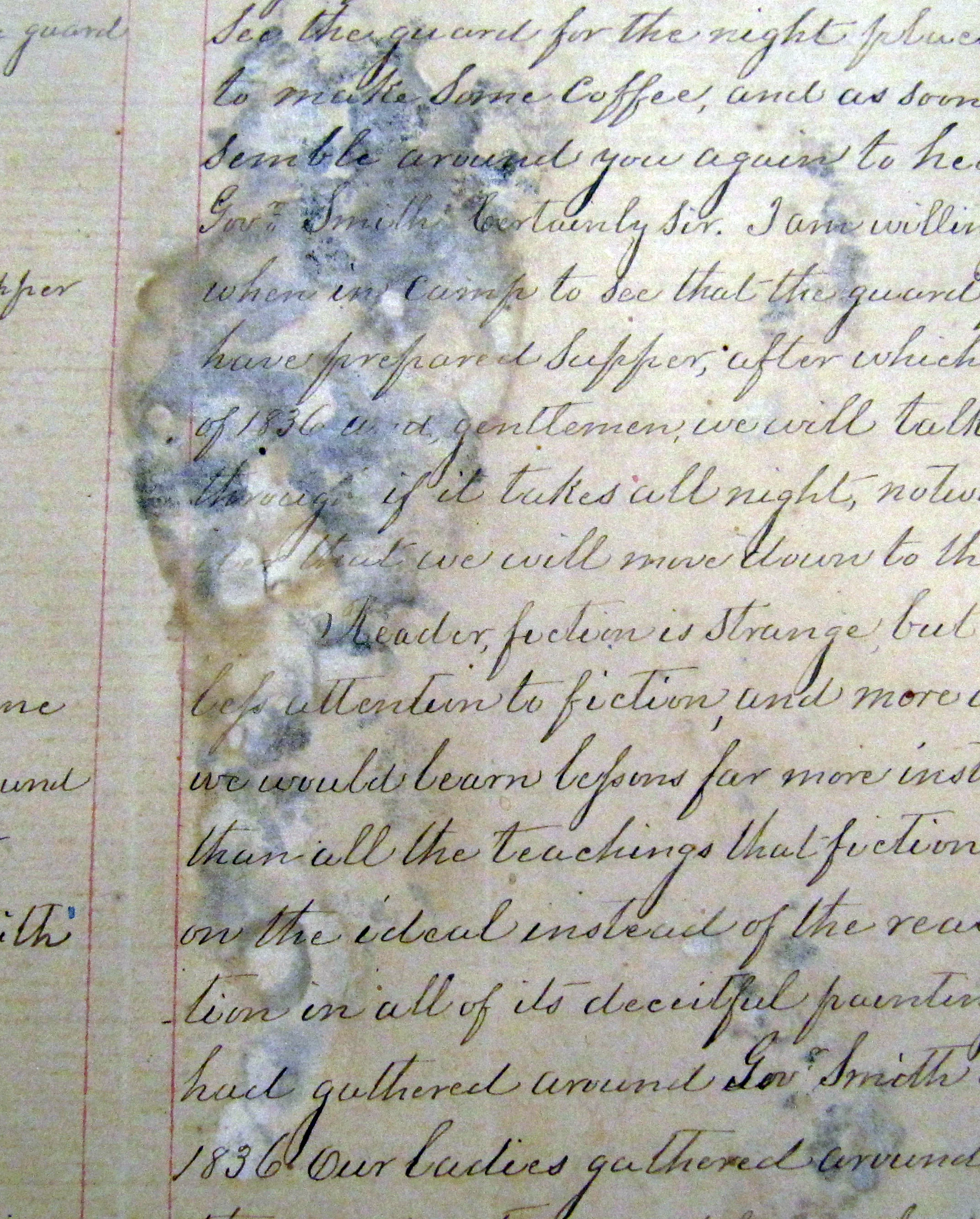
A handwritten page bloomed with mould and damp shadow, cleaned from around the writing rather than through it - so every stroke the stain crossed survives the wash intact. Drag the seam and watch it lift.
One precious page, or a whole shelf of them. Water & Stain Removal runs the same either way — here is the damage it takes on, and the records it runs across.
and the records it runs across
Why this is harder than it looks
Water is the most common serious damage to stored paper, and the most destructive to clean badly. A tide line crosses text; foxing spots sit on letterforms; mould eats into the fibre. Bleaching the stain out takes the writing with it.
What this handles
- Water tide lines across a filed document
- Foxing - rust-coloured spotting on aged paper
- Mould bloom and damp shadowing
- Coffee and tea rings
- Adhesive and tape yellowing
- Smoke and soot deposit
How water & stain removal runs
The same three moves on every job, and the third one is the part most tools skip.
Separate the layers
Staining is modelled as a discolouration layer over the paper. Ink is identified independently, by structure, so the two can be handled apart.
Lift the stain
The discolouration layer is removed and the paper beneath is returned to the tone of the unaffected sheet around it.
Restore what it crossed
Where the stain crossed text, the strokes underneath are recovered at their original density rather than being lifted along with the stain.
What actually happens to the page
Water is the most common serious damage to stored paper and the most destructive to clean badly. Three moves keep the ink safe.
The stain is a layer over the paper, not part of the ink
Staining is modelled as a discolouration layer sitting on the sheet. Ink is identified separately, by its structure, so the two can be handled apart - which is the whole reason a tide line can come off without taking the writing under it.
- Discolouration modelled as its own layer
- Ink identified by structure, independently
- Foxing and mould separated from letterforms
Cleaning strength is set per region, never once for the page
The correction is computed against the unaffected paper around each area, so a stain covering half the page is handled as a surface rather than a single subtraction. A large tide line and a small foxing spot get different strength.
- Correction computed against clean paper nearby
- Large stains handled as a surface, not one subtraction
- Coffee rings, soot and adhesive yellowing lifted
Where the stain crossed text, the strokes come back at full density
Strokes under a lifted stain are recovered to their original weight rather than being pulled off with the discolouration. Where mould has eaten the fibre itself, the area is treated as a loss - rebuilt as paper, text inside it marked.
- Ink density measured before, preserved after
- Strokes under the stain recovered, not lifted
- Fibre loss treated as reconstruction, text marked
Built to be trusted at the edges
Water & Stain Removal is one capability inside a pipeline built on a single idea: a restoration you cannot trust at the edges is a picture of one.
Everything is read back
Every restored page is read as text and compared against what was legible before, so nothing appears out of nowhere without being flagged.
The original is never lost
The untouched capture is always delivered beside the restoration - the recovery is a new version, never an overwrite.
Refusals are the product
What cannot be recovered is marked, not guessed. The guarantee is built into how the pipeline runs, not asked of a model.
It reads back as data
Fields come out checked against the document's own arithmetic, with withheld values kept in their own column - never mixed with blanks.
One sheet or a whole shelf
Per-page isolation means a single difficult document never stops the run - each page keeps its own progress, result and failure.
Free to try, no card
Free to start, no watermark, and if a document is not recoverable we would rather tell you than sell you a plan.
Where a general-purpose tool goes wrong
The same document, two philosophies. One optimises for a convincing picture; the other for a correct one - and says so when those two part ways.
What most tools do
- Bleaches the stain out and the ink with it
- One cleaning strength for the whole page
- Foxing removal lightens the surrounding text
- Treats eaten fibre as if paper were still there
What Docovly does
- Stain and ink separated into different layers
- Cleaning computed per region against clean paper
- Ink density measured before cleaning, preserved after
- Fibre loss rebuilt as paper, text inside marked
What it will not do
Enforced by how the pipeline is built rather than by instructions given to a model - which is the only kind of guarantee worth writing down.
- 1Ink density is measured before cleaning and preserved after
- 2Cleaning strength is per-region, not one global setting
- 3Mould and foxing removal never bleaches surrounding text
2
layers: discolouration and ink, handled apart
per-region
cleaning strength across the sheet
measured
ink density kept before and after
no bleach
on the text foxing sits across
Consoles that use this capability
Water & Stain Removal, answered
What people ask before sending us a document with this kind of damage.
Have a document you are not sure about?
Send us a photograph of it. We will tell you honestly whether it is recoverable before you spend anything.
Ask usYes. The correction is computed per region against the unaffected paper, so a large stain is handled as a surface rather than as a single subtraction.
Also in Repair damage
Send us the damaged one
Free to start, no card. If your document is not recoverable, we would rather tell you that than sell you a plan.