Show the document without moving the document
Produce exhibition prints and facsimile editions from fragile originals that cannot be handled, flattened or re-photographed.
Manuscript leaf · exhibition master
2.0 m print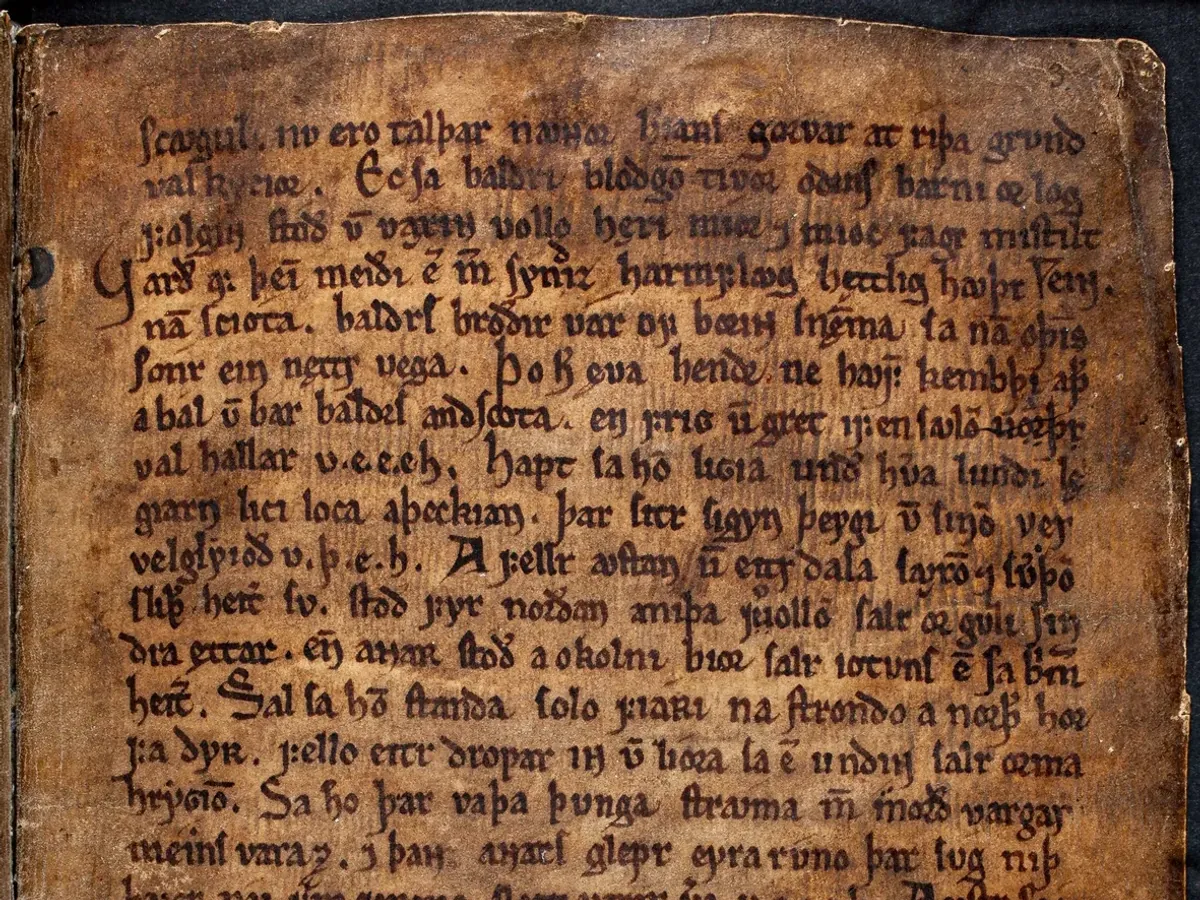
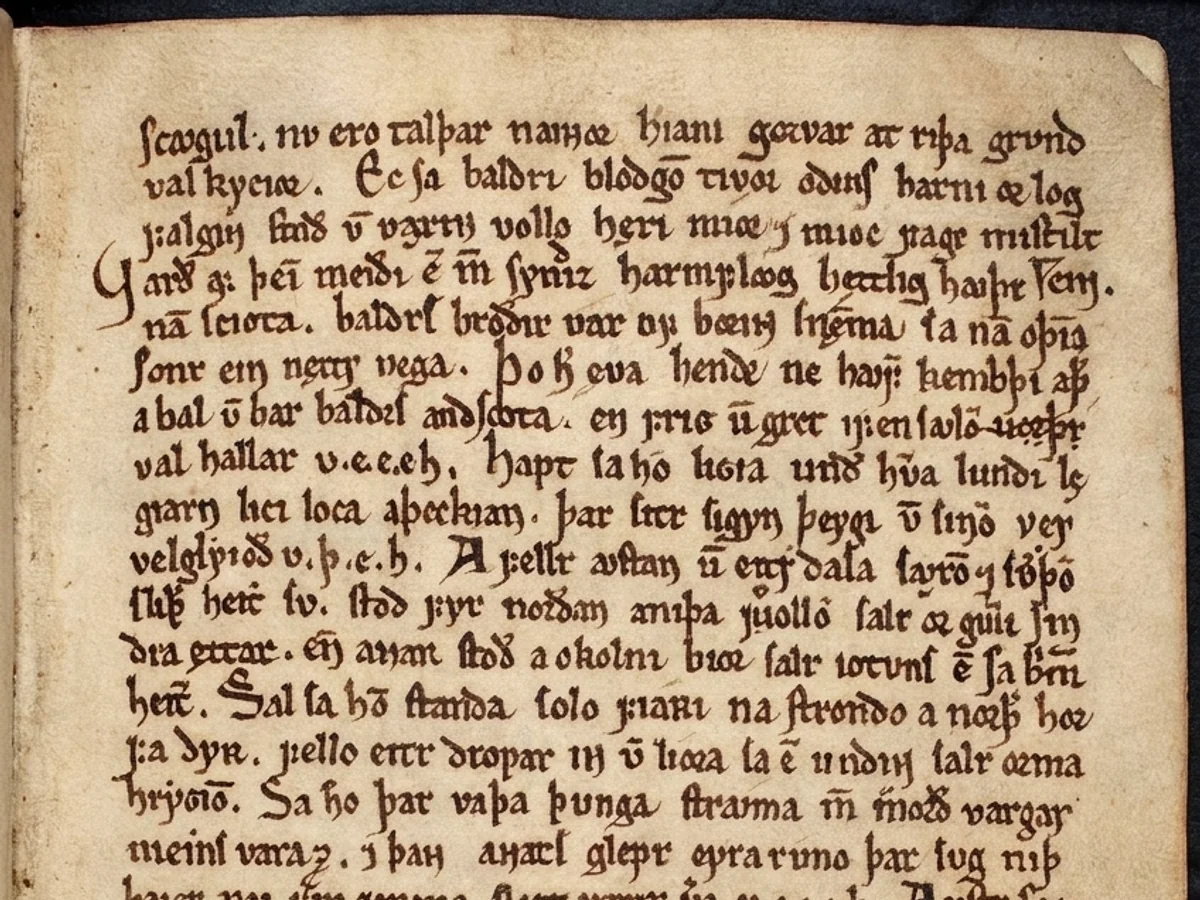
Detail recovered from captured evidence only · text read back and compared after upscale
Built for museums & heritage
What this usually looks like before us
The material a museum most wants to display is the material least able to survive display. A verified digital restoration lets the object stay in a box at the right humidity while the exhibition gets a print at full resolution - and the label can say honestly what was reconstructed.
Four steps, and it asks you almost nothing
The console looks at the page, says what it found and what it proposes, and does it. You never have to learn the filing system to get the benefit of it.
Add
Photograph the object as it lies - never forced flat, never re-mounted.
Look
Curvature, lighting and glare are measured off the capture itself.
Restore
Detail is recovered from captured evidence and the text read back to prove it.
Finish
An exhibition print, plus the overlay that lets the label be honest.
How the work is different afterwards
Survey, treatment and verification - the same three things the console shows you on every single page.
Capture as it lies
Curvature, cockling and spine geometry are corrected computationally, so brittle material is never forced flat for a scanner.
Print resolution, verified
Detail recovery is constrained to captured evidence and the text is read back afterwards to prove nothing changed.
Honest labelling
Reconstructed regions are recorded, so an exhibition caption can state precisely what is original and what is not.
Big enough for the wall, honest enough for the label
Detail is reconstructed from sub-pixel evidence in the capture rather than generated, and the upscaled sheet is read back and compared against the original reading before it is delivered.
- No texture synthesised where nothing was captured
- Text compared before and after every upscale
- The honest resolution limit is reported, not hidden
- Curvature corrected without stretching proportions
- Reconstruction overlay available for the caption
Land grant, 1740
Version history · every step revertible
print-res — from a single capture
“We printed a 1740 land grant at two metres. The reconstruction overlay went on the wall beside it.”
Exhibitions lead, maritime museum
Who this is for
Museums & Heritage covers a few different jobs. These are the ones people arrive with.
Exhibition teams
Put the document on the wall at two metres while the object stays in its box.
Curators
Caption precisely what is original and what is reconstruction - because you can show it.
Publications
Facsimile editions of printed heritage that read as the press intended.
What this audience actually uses
The consoles and the restoration behind them - every one of these is a real page, not a feature list.
Start with one difficult document.
Free to start, no card. Bring the sheet your current process cannot handle and judge museums & heritage on that.
Museums & Heritage, answered
What this audience asks before committing anything to a restoration pipeline.
Have a document you are not sure about?
Send us a photograph of it. We will tell you honestly whether it is recoverable before you spend anything.
Ask usLarge, but bounded by the capture. Detail is recovered from evidence rather than synthesised, so the job reports its honest limit instead of inventing texture to fill a print size.
Exhibition-quality without touching the original.
Produce exhibition prints and facsimile editions from fragile originals that cannot be handled, flattened or re-photographed.
Free to start · no card · the original is always kept