Forty years folded in four, delivered flat
A fold does two things: it casts a shadow line and it breaks the strokes that cross it. Removing the shadow alone leaves a document with a visible scar through it. Crease removal handles the shading and the broken strokes as one job.
- shadow + stroke
- both, or neither works
- geometry
- folds read as surface, not marks
- rejoined
- digits made continuous again
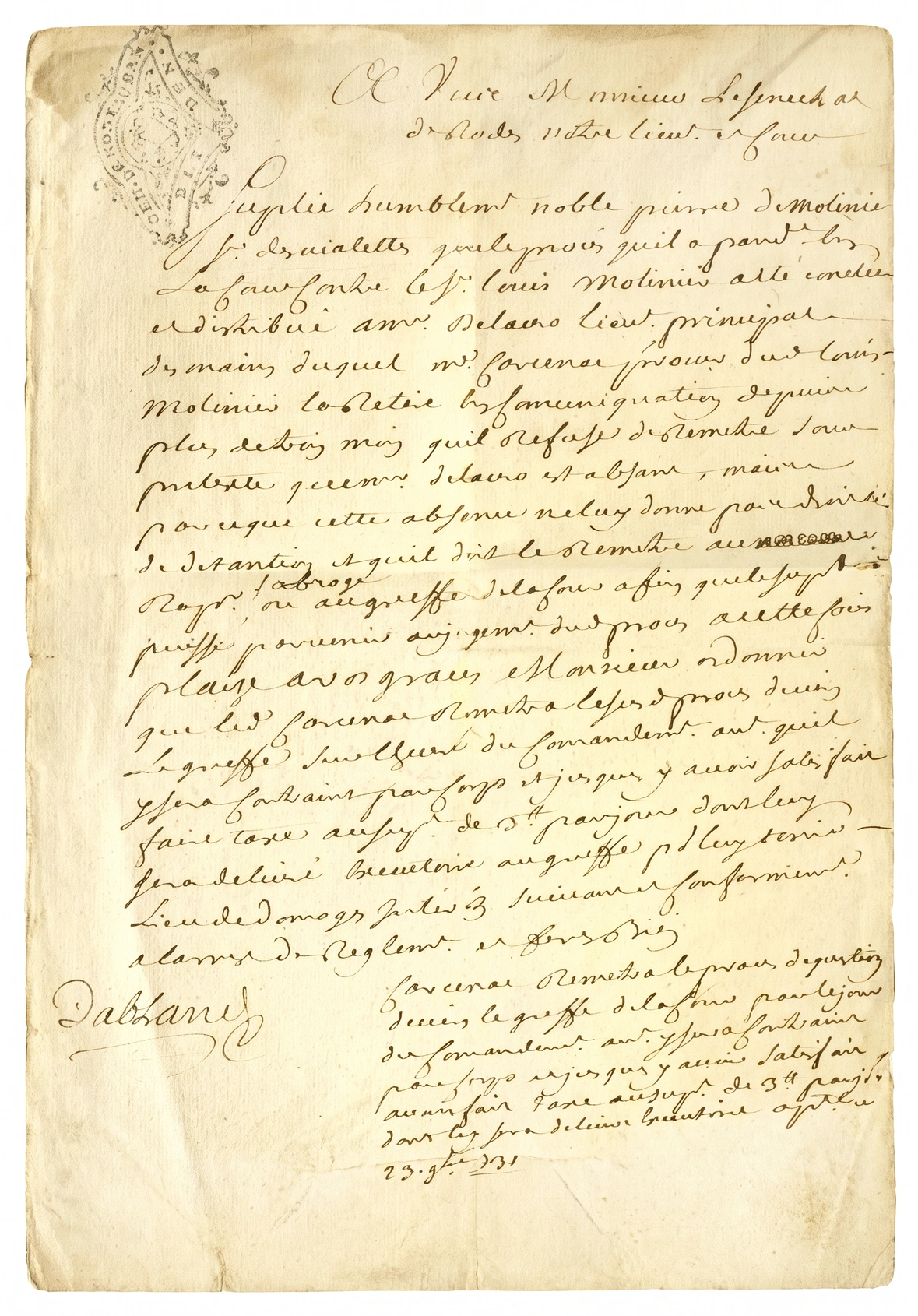
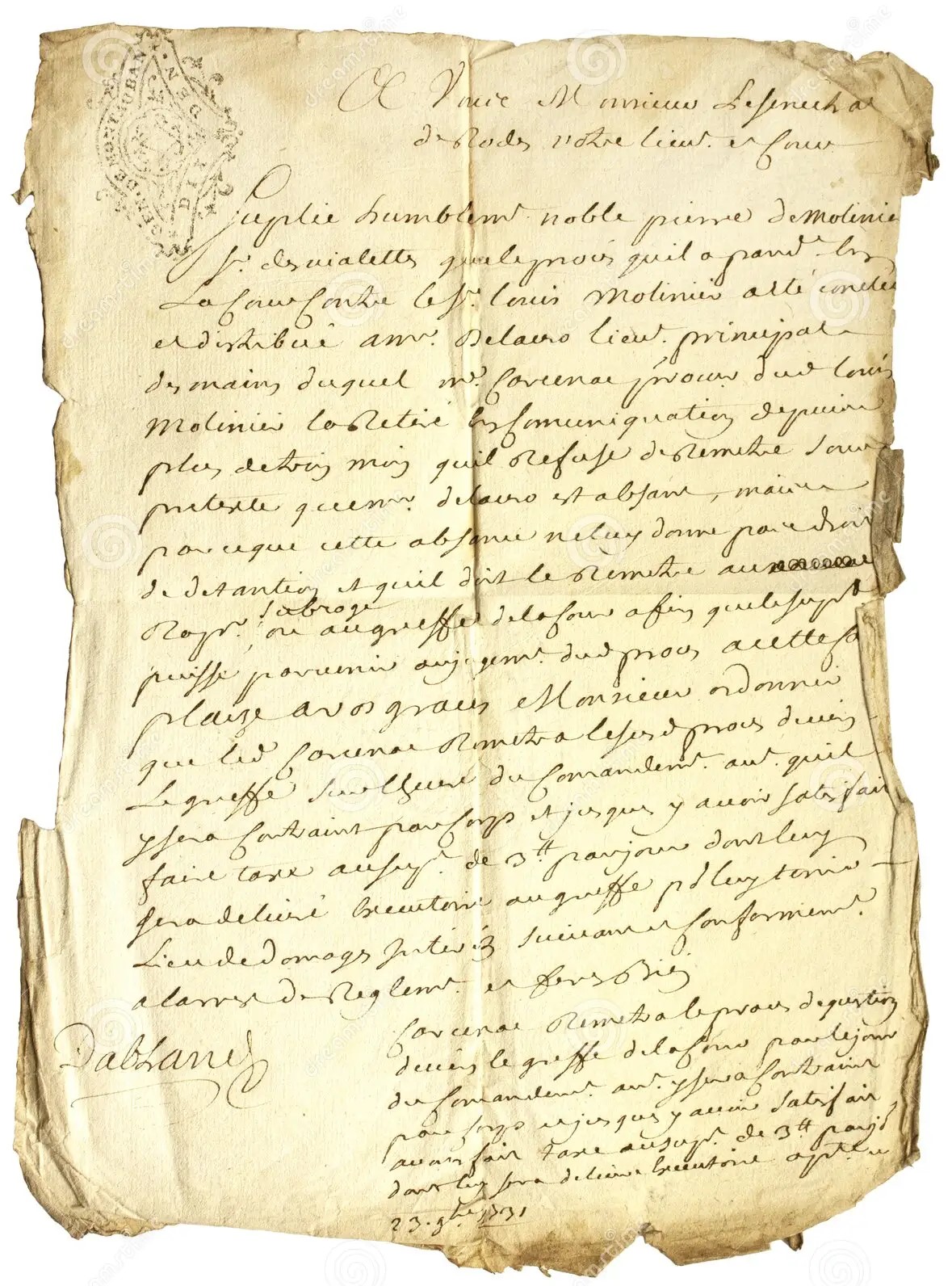
A folded, yellowed old letter flattened to an even sheet - the fold shadows lifted and the strokes that crossed them rejoined. Drag the seam: same page, before and after.
One precious page, or a whole shelf of them. Crease & Fold Removal runs the same either way — here is the damage it takes on, and the records it runs across.
and the records it runs across
Why this is harder than it looks
Almost every document that was ever posted has been folded. The fold shading survives scanning, digit shapes break where the crease runs through them, and the page never quite reads as one surface again.
What this handles
- Letter folds in halves, thirds and quarters
- Roll creases from tube-stored certificates
- Crumple shading on receipts and tickets
- Broken digits where a fold crosses a figure
- Cockling and waviness from damp
- Spine curvature on photographed books
How crease & fold removal runs
The same three moves on every job, and the third one is the part most tools skip.
Find the geometry
Fold lines and curvature are detected as surface geometry rather than as marks, which is what lets the correction be undone rather than painted over.
Flatten the surface
Shading from the fold is removed and the page is virtually flattened, correcting the distortion that curvature introduced.
Rejoin the strokes
Text crossing the fold is rejoined from both sides, so characters interrupted by the crease are continuous again.
What actually happens to the page
The fold shading survives scanning and the strokes break where the crease runs through them. Fixing one without the other is why folded pages never quite read as one surface.
Fold lines are detected as surface, not as marks
Fold lines and curvature are found as the shape of the sheet rather than as dark streaks to paint over. That distinction is the whole game: geometry can be undone, a painted-out streak cannot, and only one of those survives being looked at closely.
- Folds and curvature read as surface geometry
- Roll creases from tube storage handled the same
- Correction is revertible, not destructive paint
Shading removed and the distortion corrected
The shading from the fold is removed and the page is virtually flattened, correcting the geometric distortion curvature introduced. On survey plans and tables that distortion skews alignment, so flattening the surface is what makes the figures trustworthy again.
- Fold and crumple shading lifted
- Geometric skew from curvature corrected
- Page proportions preserved, not stretched
Characters interrupted by the crease are made continuous
Text crossing the fold is rejoined from both sides, so a digit broken by the crease is whole again rather than two halves with a gap. What was photographed inside a fold you could not physically open was never captured, and that limit is reported rather than invented around.
- Strokes rejoined from evidence on both sides
- Cockling from damp flattened as curvature
- Text hidden inside an unopened fold reported
What flattening can and cannot reach
Curvature correction works on what the camera saw. A few honest limits keep the result trustworthy on the documents where alignment actually matters.
Capture it as it lies
Never force brittle paper flat. Photograph it as it sits and curvature within the captured surface is corrected from there.
Distortion, not just shadow
Geometric skew from curvature is corrected as well as the shading - which is what matters on survey plans and tables.
Damp cockling handled
Waviness from damp is treated as curvature: flattened and its associated shading removed in the same pass.
Hidden text is reported
Anything that lived inside a fold too tight to photograph was never captured, and it is flagged rather than guessed.
Built to be trusted at the edges
Crease & Fold Removal is one capability inside a pipeline built on a single idea: a restoration you cannot trust at the edges is a picture of one.
Everything is read back
Every restored page is read as text and compared against what was legible before, so nothing appears out of nowhere without being flagged.
The original is never lost
The untouched capture is always delivered beside the restoration - the recovery is a new version, never an overwrite.
Refusals are the product
What cannot be recovered is marked, not guessed. The guarantee is built into how the pipeline runs, not asked of a model.
It reads back as data
Fields come out checked against the document's own arithmetic, with withheld values kept in their own column - never mixed with blanks.
One sheet or a whole shelf
Per-page isolation means a single difficult document never stops the run - each page keeps its own progress, result and failure.
Free to try, no card
Free to start, no watermark, and if a document is not recoverable we would rather tell you than sell you a plan.
Where a general-purpose tool goes wrong
The same page, two philosophies. One optimises for a convincing picture; the other for a correct one - and says so when those two part ways.
What most tools do
- Paints out the fold streak and stops there
- Leaves broken digits split across the crease
- Ignores the geometric skew curvature adds
- Irreversible - the streak is gone for good
What Docovly does
- Fold read as surface geometry, then removed
- Broken strokes rejoined from both sides
- Curvature distortion corrected, proportions kept
- Revertible - the original surface is preserved
What it will not do
Enforced by how the pipeline is built rather than by instructions given to a model - which is the only kind of guarantee worth writing down.
- 1Strokes are rejoined from surviving evidence on both sides
- 2Page proportions are preserved when curvature is corrected
- 3Deliberate creases on the original are recorded in the job
2
problems solved: shading and broken strokes
geometry
folds detected as surface, revertible
aligned
proportions preserved on plans and tables
reported
text hidden inside a fold, never invented
Consoles that use this capability
Crease & Fold Removal, answered
What people ask before sending us a document that needs this kind of clean-up.
Have a document you are not sure about?
Send us a photograph of it. We will tell you honestly whether it is recoverable before you spend anything.
Ask usUp to a point. Capture it as it lies - never force brittle paper flat - and curvature within the captured surface is corrected. Text hidden inside a fold was never photographed, so it cannot be recovered.
Also in Clean the page
Put the messy one in first
The grimy, folded, badly-photographed page you assumed was a lost cause. Free to start, no card, and the original is never overwritten.