The historic record, legible and still itself
A historic document is evidence before it is decoration, so authenticity matters as much as legibility. Seals, signatures and wax are held and composited back from the original, the faded official ink is recovered without modernising a hand, and every treatment is recorded so an institution can prove exactly what was done.
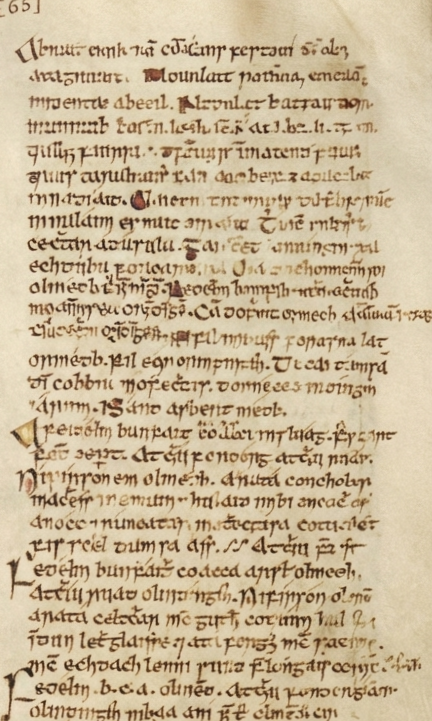
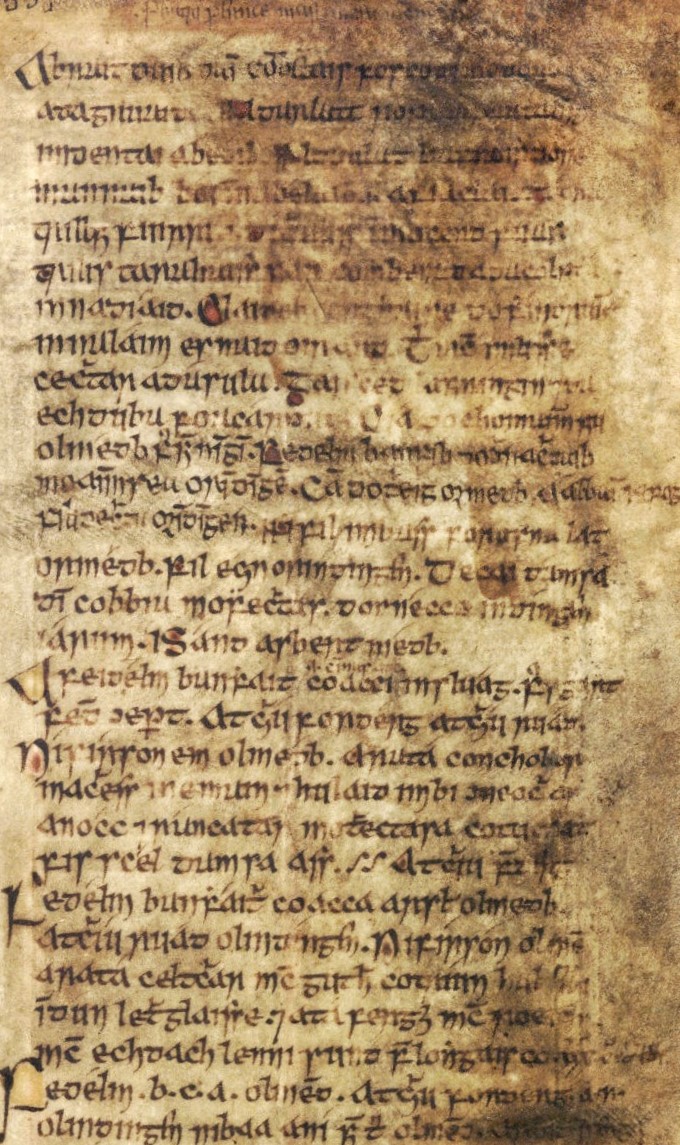
Transcription
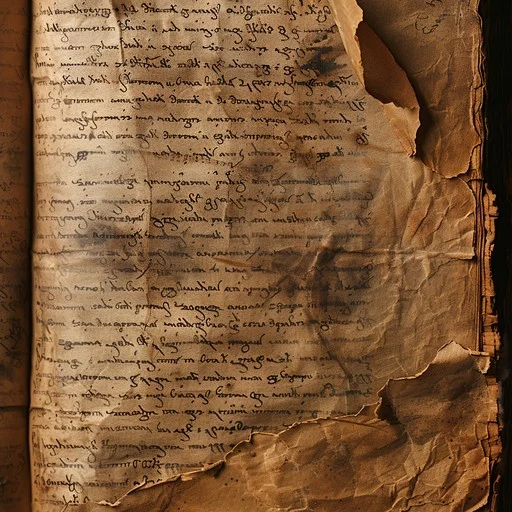
A medieval manuscript leaf, browned
and water-stained, cleaned back to
legible parchment — the secretary hand
read leaf by leaf, expansions marked.
A cleaning passes across the page; the damage lifts and the text is read back. Every job keeps the untouched original.
Every kind of historical documents we restore
seals
held, never regenerated
revertible
every treatment
provenance
chain recorded
facsimile
resolution out
What goes wrong with these documents
The survey vocabulary is specific to this document family, because the damage is. Recording it is what produces the restoration instruction - there is no prompt box.
- Foxing, mould and water tide lines
- Brittle paper and deep storage folds
- Faded official ink and light-struck areas
- Tears, losses and guillotined margins
- Wax seal loss and cracked impressions
- Iron gall ink burn-through
Survey, treat, read, deliver
Every job follows the same careful path, and each treatment lands as its own revertible version with a record of what was done.
- 1
Survey the record
Log foxing, tide lines, brittle folds, ink burn-through and the seals present, the way a conservator would, on each sheet.
- 2
Hold what authenticates
Seals, wax and signatures are boxed and excluded from every treatment, then composited back from the original at the end.
- 3
Recover the ink
Faded official ink and surface degradation are lifted without redrawing a single letterform, and deep folds are flattened without breaking the strokes.
- 4
Record & deliver
Each treatment lands as a revertible version with its own record, so the institution can say precisely what was done.
What this console can do to a page
Any treatment can run on a single page or across a whole collection, and each lands as its own revertible version.
Surface revival
Foxing, staining and fading lifted from around the official ink.
Seal & signature hold
Seals, wax and signatures are composited back from the original, never regenerated.
Tear & loss repair
Mark a tear or missing corner and only that area is rebuilt from the surviving sheet.
Fold flattening
Decades of deep storage folds flattened without breaking the strokes that cross them.
Palaeographic transcription
Reads early modern and official hands into text, expansions marked.
Provenance record
Every treatment lands as a revertible version with its own record for the catalogue.
Every treatment, shown happening
No sliders to drag - each clip is the fix itself, playing on a loop. The foxing lifting, the halftone resolving, the old hand read back into text.
The seal on the delivered sheet is the original
On this 1918 charter the seal is found, boxed and excluded from every treatment, then composited back from the original with a feathered edge - so the mark is the original, not a regeneration.
- Seals and wax held out of processing
- Composited back from the original
- Signatures never redrawn
- The join is invisible at size
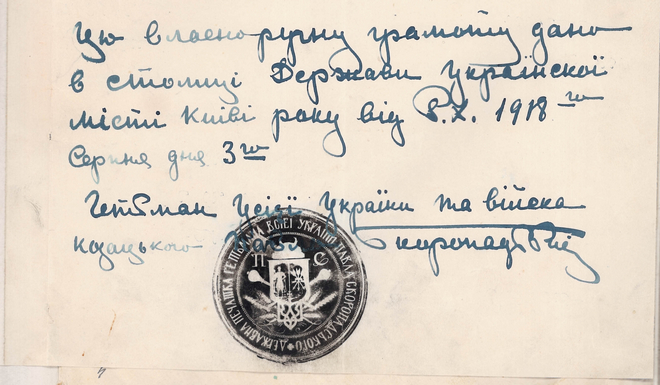 Original seal · held
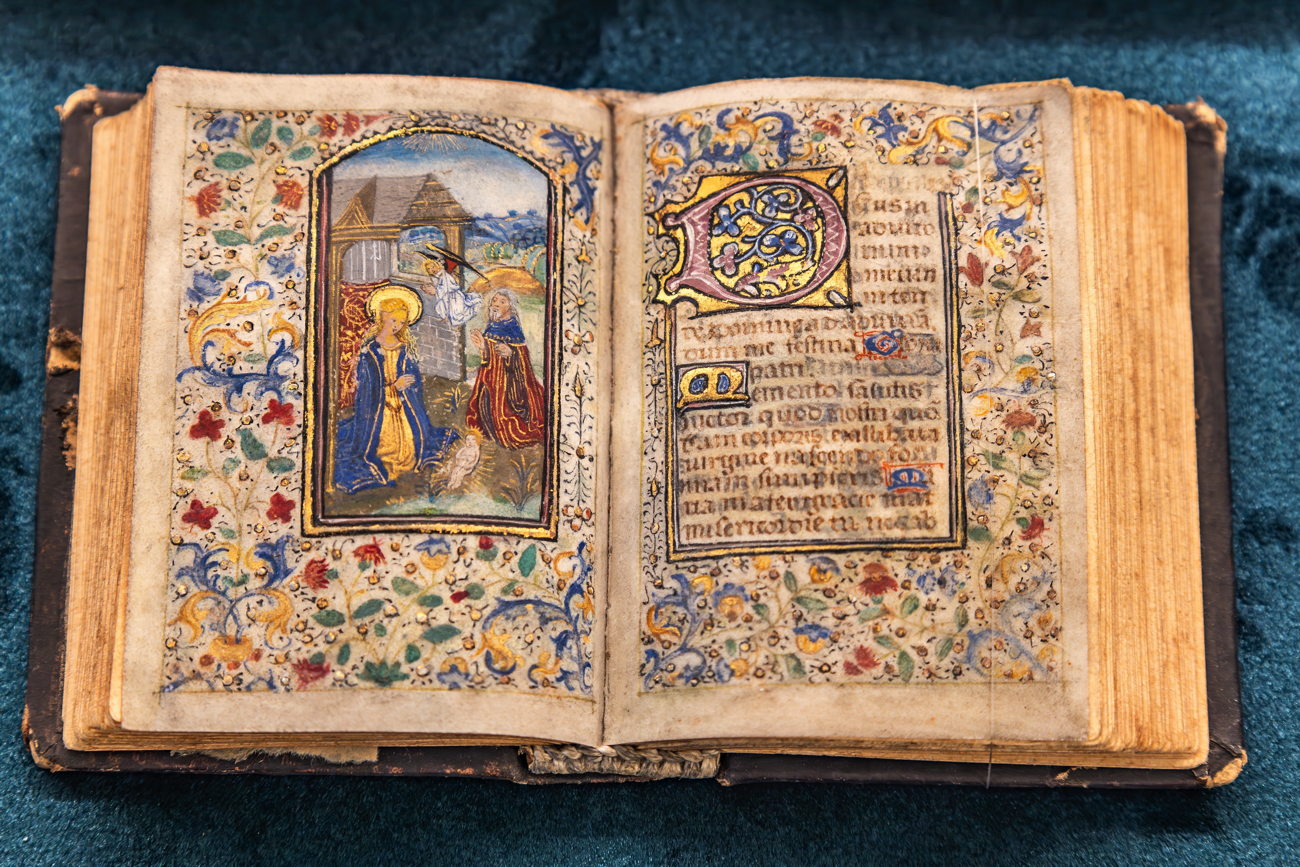
A Book of Hours, grime lifted leaf by leaf
Centuries of grime and yellowing cleaned off an illuminated Book of Hours, the gilding, the lapis blue and the flowered borders left exactly as they were painted - the age lifted, the character kept.
- Grime and yellowing lifted from the leaf
- Gilding and pigment never touched
- Illuminated borders kept intact
- Vellum tone chosen, not bleached
A torn manuscript, the loss rebuilt in place
A manuscript leaf torn away at the corner and margin: the loss is outlined, genuinely missing parchment rebuilt from the surrounding sheet, and any text inside it marked rather than invented.
- Loss outlined before anything is rebuilt
- Missing parchment continued from around it
- Text inside a loss marked, not filled
- Only the marked area is touched
 Loss rebuilt in place
Evidence first, decoration second
A historic document is evidence before it is anything else. Authentication is held and returned from the original, the ink is recovered without modernising a hand, and the whole chain of treatment is recorded.
- Seals, wax and signatures are composited back from the original, never regenerated.
- The paper surface is repaired without redrawing letterforms.
- Transcription is delivered as separate text, beside the image, never over it.
- Every treatment is a revertible version with its own provenance record.
Provenance
- Every treatment
- revertible
- Transcription
- delivered separate
- The hand
- never redrawn
10 document types
Everything this console takes in
Pick the type before you upload and the uploader, format rules and checks follow from it.
Captured as data
What is read back off the page
Every field carries its confidence and its source crop, and anything that fails a check is withheld into its own export column rather than delivered.
Capture guidance
Get this right and everything downstream is easier
- 1Photograph seals and wax straight on, with even light, in a second frame.
- 2Never force a brittle historic fold flat - capture it as it lies.
- 3Include a scale bar; historic sheet sizes are part of the record.
The jobs this console is built for
Real reasons people restore these documents - an exhibition, a family album, a searchable archive before the paper gives out.
A charter for exhibition
Foxing and fold shadows lifted off a brittle charter while its wax seal is held and composited back untouched, delivered at exhibition resolution.
A treaty page for the record
Faded official ink recovered and the signatures held from the original, with a full provenance chain for the archive.
A historic deed for the courtroom
A guillotined margin and a deep storage fold rebuilt, the seal preserved, and every change recorded as a revertible version.
seals
held, never regenerated
A historic document is evidence before it is anything else. Authentication is held and returned from the original, the ink is recovered without modernising a hand, and the whole chain of treatment is recorded. The untouched original is always delivered alongside the restored file.
A legible copy of a document you already hold
Restoration is a reading aid and an archival tool. Being plain about the line it does not cross is part of the product.
- Repairs foxing, tears, folds and fading on historic official paper
- Holds and composites seals and signatures from the original
- Transcribes early modern and official hands, expansions marked
- Records a full provenance chain for the catalogue
- Regenerate a seal, signature or wax impression
- Modernise or redraw the historic hand
- Invent text where the original is illegible
- Discard the untouched original
“It cleaned a 1701 charter and handed the wax seal back exactly as it was - composited from the original, not redrawn. For a document that is evidence, nothing else would have done.”
Historical Documents, answered
The questions people ask before sending us this kind of document.
Have a document you are not sure about?
Send us a photograph of it. We will tell you honestly whether it is recoverable before you spend anything.
Ask usThey are held out of every restoration pass and composited back from the original with a feathered edge, so the mark on the delivered sheet is the original mark - not a convincing regeneration of it. For a historic document that distinction is the whole point.
Also in Heritage & Media
Try it on your worst historical document
Free to start, no card. The untouched original is always delivered alongside the restored file.